Showing posts with label Book Selling Information. Show all posts

Sunday, August 18, 2019

Selling Books with Pulp Paper

During World War I and World War II, Grosset and Dunlap used pulp paper in its books due to paper shortages.  Cupples and Leon also used pulp paper in its books during World War II.  Other publishers such as Goldsmith, Whitman, and World Publishing Company used pulp paper in all of their books. 

Pulp paper does not age well.  I have now collected books for 28 years.  Grosset and Dunlap books from World War II with pulp paper were not in good shape 28 years ago, and I have noticed a significant decrease in condition of those books since that time.  The condition will only get worse as more time passes.

I don't know how much longer the books can even last in usable condition.  By the time the books are 100 years old, they may begin disintegrating.  Some books are already at that point.  I have seen a few Kay Tracey Cupples and Leon books with pulp paper from World War II with what I call "binding rot."  The binding looks like it is turning into compost.  Pieces fall out, and the paper detaches from the binding.  Add another 25 to 50 years, and far more of the books will have binding rot.

Selling books with pulp paper is quite problematic.  I seldom have books that I have sold returned to me due to buyer dissatisfaction, but when books are returned, they are usually returned because of pulp paper.

I try to convey to buyers in such a way that they know that the books have pulp paper.  I can do this easier on eBay, since I can use different colors of font in my listings in order to draw attention to the pulp paper.  I show a photograph of the pulp paper to try to get the point across.

On Etsy, I show a photo of the pulp paper and mention it in the description, but I cannot use a different color of font.  The way the pictures display in Etsy listings may make it less likely that buyers will view all photos and see the pulp paper.  I recently had a Nancy Drew book with pulp paper that was purchased on Etsy returned for a refund due to buyer dissatisfaction.  I decided to pull all of my Nancy Drew books with pulp paper off of Etsy.  It's just not worth the potential trouble.

The first two photos show the books that I just pulled off of Etsy.  The Message in the Hollow Oak with dust jacket seen on the right is the book that sold and was returned to me.


These next books have dust jackets and pulp paper.  They are extras that have not been listed for sale yet.


These last books are primarily books with condition issues that make them undesirable to sell individually.  The first three books in this group have pulp paper.  The rest of the books have good quality paper, although the paper looks similar to pulp paper due to the rough condition of the books.


I am going to place the books with jackets in individual listings on eBay.  The rest of the books will go in bulk lots.  For books like these, I strive to be blunt and make the books sound not that great.  Sometimes I try to make the books sound absolutely awful.  In those cases, the books are also priced really cheap.  I have never had one of my cheap bulk lots returned for a refund, so my approach seems to work well.

Friday, November 17, 2017

The Expectation of Low Price Regardless of Scarcity

In the Facebook groups, members frequently post about their finds, usually at a certain chain bookstore, and the books were purchased at below value.  In fact, practically the only members who ever state what they paid for their books are the ones who announce that their books cost from $0.10 each up to $1.00 to $2.00 each.  Sometimes a member will photograph a big stack of vintage books and state that the entire stack was just a few dollars.

I ran searches on the names of some of the people who often post about very cheap finds.  Occasionally they state that a book that they purchased was priced higher than they would have liked, but they omit the price on those posts.  Interesting.  These people only mention prices when the books are extremely cheap.

The rest of the members almost never reveal the prices of their books, probably because they paid the actual market value.  Since the only people regularly revealing prices paid are the ones who purchased the books at very low prices, many collectors now have unrealistic expectations about price.  Some buyers think all books priced above a certain amount are too high, regardless of scarcity.  For some buyers, anything above $5 is too high.  For other buyers, anything above $40 or $50 is too high.  It doesn't matter how rare a book is; they expect for the book to be priced low.  They fail to understand that some books will be priced higher, due to supply and demand.

I had a copy of Vicki Barr #15, The Mystery of Flight 908, up for sale at $130.  Someone was looking for a copy, and the link to my book was shared in one of the groups. Someone else immediately said that my price was "crazy."  I did not take offense, because I knew that I had priced my book at the approximate value.  Not only that, mine was by far the cheapest copy available for sale.

The very few others up for sale online were priced at around $500.  I purposely priced mine the lowest.  I'm sure I needed to price mine at no higher than $50 for my price not to have been considered crazy by many series book buyers.  However, if I had priced my book at $50, it would almost certainly have sold immediately to someone who would have placed it back up for sale at $150 or higher.  There was no point in me giving it away at a low price. 

Regardless, I could not price my book at just $50 since I paid more than $50 for it.  Whenever a seller has scarce books up for sale, they most likely paid high prices for the books.  Sellers are not able to find scarce books for just a few dollars each.  I know of a high-end seller of inucabula—books printed before 1501—who spends $20,000 or more on single books and then resells them for $50,000 or more.  Expensive books that are up for sale were expensive for the sellers to purchase.  Never assume that the sellers purchased the books for mere pennies.  Sellers have made significant investments in their inventory.

Getting back to my book, I had the book available for someone who needed it, but I priced it high enough to recover my investment and make it less likely to be purchased to be placed back up for sale at an exorbitant price.  The book is now residing in someone's collection instead of being stuck in limbo for sale online. Many online sellers play "keep away" with scarce books by placing them up for sale at outrageous prices.  I want to get a decent price for my scarce books, and I want them to have a chance at finding a home.  Those books must be priced where they will sell, but probably to someone who needs the book.

At the same time, please understand that I do not mind dealers purchasing from me to resell.  If someone had purchased my book and offered it at a higher price, that would have been fine.  However, I did try to price it so that it would more likely go directly to someone who wanted to keep the book.

In a discussion in one of the series book groups, one person noted that collectors tend to price their books higher than bookstores and antique shops.  This is certainly true for books that are special in some way.  We know what they are really worth.  We know the historic selling prices over the last 20 or more years.  Unfortunately, those new to collecting do not know the historic selling prices, so they think we have priced the books too high.

International editions have become quite problematic to sell.  Buyers expect the books not to cost more than other series books.  In order to collect international editions, I must import the books from other countries.  The seller from whom I purchase the book may price a book at just $5, but I must typically pay postage of $10 to $20 to get the book.  The average international edition ends up costing $15 to $25, and sometimes the cost is much higher.

I have quite a few international editions for sale on eBay.  Many of them came from purchases made over two years ago when someone's entire collection of series books was donated to a library, which then evidently sold the books very cheaply.  Ultimately, the books ended up in large lots on eBay.  I acquired a large number of extras as a result of purchasing some of the bulk lots.   I have had some of the extras up for sale for over two years, and nobody wants them.  Those books are now priced at below my cost.  Even so, I have prospective buyers contact me, asking if I will reduce the prices.

I believe the problem is that because I have had so many extras from those purchases that prospective buyers perceive that the books are easy to find and should be priced cheaply.  Awhile back, someone made an observation about the availability of Vicki Barr books.  They believed that the international editions are much easier to find than the original editions.  They were referring to my listings of international editions of Vicki Barr books.  I was a bit taken aback that someone would think that the international editions are easier to find simply because one seller happens to have a bunch of them.  Now that my extra Vicki Barr international editions have sold, none are available.  They were never easier to find, but they were perceived to be due to my listings.

I have now sold most of those international editions, but for some reason, nobody will purchase my Danish Dana Girls books.  The books have beautiful cover art and are priced below my cost.  The Danish editions are my very favorite international editions, and I cannot understand why the books do not sell.  Actually, I do know why.  The books have been listed for over two years, so buyers think that they are easy to find.  Once they sell, the books will be hard to find.

http://stores.ebay.com/Jennifers-Series-Books/Dana-Girls-/_i.html?_fsub=4477506017

Thursday, December 1, 2016

Strange Buyer Questions

Potential buyers who ask strange questions, especially ones that are unnecessary, are always concerning to sellers.  Fortunately, most of these buyers do not make a purchase.  For some reason, they like to contact sellers and ask questions that are already answered in the item description.  It's like they aren't really interested in the item, but they need for the seller to answer a question before they can let it go.

I recently had a prospective buyer ask me two questions.  The first question was whether the price written inside was in ink or in pencil.  The second question was for me to "be more specific as to the 'light wear' " that I described.

It's really hard for me to answer the second question without being snarky.  I am also always quite concerned when I receive these kinds of questions.  I immediately checked the buyer's feedback where I determined that this buyer has an above average number of problems with sellers.  This buyer leaves negative and neutral feedback on a somewhat regular basis.  While the buyer might have genuinely had more difficult sellers than the average buyer, it is always concerning to see a buyer with an above average number of problems.

When I answer these kinds of questions, I word my response in such a way as to hopefully dissuade the buyer from purchasing the book.  I told the buyer, "The price inside is written in pencil. However, I believe part of it is heavy enough that it will not erase. The penciled price is on top of another erased price that did not erase completely. So it won't be possible to completely remove all traces of the prices."  That was how I attempted to dissuade the buyer.

In regard to the buyer's first question, I tried not to be snarky.  I wanted to write, " 'Light wear' is wear that is light."  I also wanted to write, "Look at the pictures."  I refrained, but what I wrote wasn't much different.  I replied, "Light wear is wear that is minor rather than major. You can see the light wear in the picture. Hover your cursor on the photos to view them large. You can see a small amount of white showing through at the very ends of the spine and corners. That's the light wear."

The buyer did not purchase the book, which was fine with me.

Some buyers ask for me to take additional pictures of the book or jacket.  Most of the time, I understand why.  One buyer wanted a photo of a certain illustration inside a Three Investigators book.  I assume that the buyer was seeking a variant.  That makes sense.  Other buyers want photos of the front and back flaps of the dust jacket.  I understand this request as well.  The best way to make sure a price code is either black or red is to ask for a picture.  Sometimes it is also easier just to request a photo than to make certain that a seller gives the correct last title in the series list.

Then there are the other picture requests.  One buyer asked for me to take "random pictures" of several pages from different parts of the book with no explanation as to the purpose of the request.  I was given no information about which pages I should select for the "random pictures."  I assumed that the buyer probably wanted to know about the paper quality or wanted to check for water damage, but I would have appreciated the buyer giving me an idea as to the purpose of the request.  I photographed some random pages, and as expected, the buyer did not purchase the book.

I have had several prospective Hardy Boys buyers ask me to take pictures of the pre-text list, title page, and/or copyright page, telling me that they are seeking a certain printing.  I am not nearly as knowledgeable about the Hardy Boys series as I am about Nancy Drew, so in each case I looked in Hardy and Hardy Investigations to see what I didn't know that I should have mentioned.

Strangely, I could find nothing special about those pages in the books about which the buyers inquired.  I don't know what the pictures were going to reveal about the books. Perhaps some additional information has come to light about some books, and since I am not active in Hardy Boys groups, I don't have that information.  In any case, I am left perplexed and wondering whether some of the picture requests are just to see if I'll take the pictures.

Tuesday, June 21, 2016

How to Avoid Trouble When Buying and Selling Online

Recently on Facebook in one of the groups, someone did not honor a transaction.  I posted a cautionary note on Facebook, explaining how to be careful.  I want to expand on it here.

1.  Do not mail items before you receive payment unless you know the other person quite well and know they can be trusted.

2.  Do not trade items with another person unless you know that person quite well and know they can be trusted.  If you offer items for trade and someone you don't know well responds, the person who responds to your offer should mail their items first.  You should wait to receive the items from the other person before you mail anything.

3.  Be very cautious about sending people free items.  Some people have a habit of asking many people for free items, and they get more free items than any of us can imagine.

4.  Conduct all negotiations in such a manner that the other person cannot delete record of the negotiations.  On Facebook, the negotiations should be through private messages, because neither person can delete the messages.  If you negotiate through a message thread in a group, the person who started the thread can delete everything so as to remove all record of what transpired.  This is also true for comments.   If you respond to a comment in a Facebook group and negotiate there, the person who made the original comment can delete the comment and your responses.  That's apparently what happened on Facebook.

5.  If someone sounds a bit desperate or is rather bold in how they contact you, be very careful.  I find that people who come across as desperate tend to fall victim to temptation much more easily than others.  In other words, desperate people are willing to do anything to get what they want.

On eBay, desperate buyers contact sellers of valuable items asking them to end the auction early.  They will tell the seller that they need the item quickly, because they have a sick relative who is about to die and would just love to have that item before death.  What they don't tell the seller is how valuable the item is and that they want the auction ended so that they can purchase it for a low price.  Never close an auction early at a buyer's request.

6.  Be wary of anybody who comes across as overly friendly.  These are the people who send private messages giving you wonderful compliments.  They act like you are their new best friend during the very first exchange of messages.  If you have a transaction with one of these people on eBay, they might tell you that they will leave you "glowing feedback." 

I have had several people who were overly friendly with me at first who later turned on me, attacked me, or tried to take advantage of me in some fashion.

7.  Be wary of anybody who reveals too much information.  If somebody tells you about their life story, their disabilities, or other revealing information, you should be careful.  That information is irrelevant in a business transaction.

8.  Do not reveal your insecurities.  If you are a new seller or do not feel knowledgeable about what you are selling, don't reveal that information to your buyers.  This is because dishonest buyers will use that against you.  They look for inexperienced sellers to target with their schemes.

9.  Be wary of sellers who declare how honest they are in their descriptions.  I have encountered a few sellers who made a point of stating that they were "honest sellers" and then proved later by their actions that they weren't honest at all.  It's a red flag.

Since I'm sure some of you are already getting upset, I must state that I am well aware that some honest people volunteer that information in their listings.  However, telling people you are honest is not necessary and sounds strange.  Think about it:  Would you walk into a store, approach management, and declare that you are an honest customer?  Don't you think they would wonder about you?  That's why sellers should not make that kind of statement; it sounds odd.

If you follow these guidelines, you can avoid most trouble in your online transactions.

Sunday, November 3, 2013

People Who Want to Buy Sets of Books

I get asked a least a few times per year whether I have a complete set of Nancy Drew books, Trixie Belden books, or some other series that I can sell to whomever asks.  The prospective buyer asks how much the set would cost and what the postage would be.  Depending upon the request, I may not have a complete set of extra books together.  Sometimes I do, but I always reply that I don't.

Most of the books that I sell were purchased in partial or complete sets, which gives me a wholesale price.  These days, complete sets sell for less than the total for which the books will sell individually.  I am not interested in taking a complete set and reselling it for what I paid for it.  I am also not comfortable with marking the set up to a much higher price and selling it to the person who asked.  I also want the books for individual inventory, so the last thing I want is to get rid of a bunch of them all at once.

Sometimes I do sell sets of books, but this is always done to get rid of certain books fast without taking as much of a loss as I would if I were to sell an incomplete set.  I decided recently to clear out all of my Nancy Drew Twin Thriller books that I had for sale.  It was a partial set, and I determined that I would have to sell the books at less than what I paid for them.  Instead, I put together a complete set of Nancy Drew #1-56 so that the Twin Thriller books would be part of a complete set. 


I sold the set for $199.99 with free shipping, and the lot only took a few days to sell.  After subtracting shipping and fees, I got around $150 for the books.  I managed to avoid taking a loss, which was my goal.  If I had decided to be patient with selling the Twin Thriller editions individually and had also chosen to sell the rest of the books individually, I would likely have gotten over $200 for the books.  One does take less when selling books as a complete set. 

Around six years ago, I had a strange request from a prospective buyer.  This person asked me if I would put together a complete set of Motor Boys books in dust jacket for him.  He wanted to pay me in advance and was willing to pay whatever I thought the books would end up costing.  He didn't want to do the work himself; he wanted somebody else to find him the books.  He didn't mind if it took a year or more for me to acquire the books.  Remember, he wanted to pay in advance for this set of books.

I had a problem with this request for a number of reasons.  I didn't want to invest my time and energy into searching for books for somebody else.  I wanted that time to search for my own books.  I was not at all comfortable with taking a large sum  of money one or more years ahead of time for a set of books that I would likely have much trouble building.  I also had no idea how much the books would end up costing and how much to charge.  Last, I knew that if I spent a significant amount of time building this set that I would likely get attached to books and not want to sell them.  Needless to say, I declined this person's request.

Wednesday, July 18, 2012

Book Condition Disclosures

In a message forum, someone asked about what condition issues should be disclosed when a book is offered for sale.  The most popular response was "all of them."  More specifically, what is most important?  As I answer this, I think about what is important to me.

Musty odor is a significant flaw and must be disclosed. As a book buyer, I cannot stand books that smell musty. Exposing the book to fresh air sometimes helps, but generally, musty odor does not go away.  I have bought books for my collection and had to immediately seek an upgrade due to a musty odor.

Cigarette odor should also be mentioned, although it is less of a problem. I find that cigarette odor tends to go away on its own after several months. While I dislike receiving books with undisclosed cigarette odor, I know that time will usually care of it.

Sellers sometimes try to be helpful by using a fragrance to cover the odor.  This is a bad idea. What will happen is that the book will still have the original odor and will also have an additional perfumed smell. Book buyers do not want their books to smell like Febreze, perfume, or dryer sheets.

If there is any kind of writing inside the book, it must be disclosed. Even a name written inside is important. I do not care if my books have a name inside, but I once had a buyer go off on me because I accidentally did not mention a name written inside. So, I always check for a name or inscription and mention it.  Sometimes, I do miss an inscription or signature, so buyers who need books with no writing should also make certain that the seller has not overlooked an inscription.

As a book buyer, I do mind if the name is written huge and in crayon, so as a seller, I make sure that I mention when a name is written rather large and in crayon. I also mention if a name is written in permanent marker that has bled through the page, since that is far worse than a neat penciled name.

If pages are ripped or creased, that needs to be mentioned. If pages are missing, that should be mentioned.  Missing pages usually make a book worthless, so those books should not be sold.

A flaw that is almost never mentioned by sellers is the problem of blurred images on dust jackets and book covers.  The blurring is caused by a printing flaw and can be easily missed.  Since sellers tend to avoid mentioning this flaw even when the blurring is obvious, buyers must always be on the lookout for blurring of the cover art.  I have seen sellers receive negative feedback from buyers for failure to disclose this flaw.  Nobody wants a collectible book with blurred cover art.

Most important, have a photograph of the actual book for sale that is in focus so that we can see the book. For collectible books such as the ones I buy and sell, the buyer needs to see the front cover and spine. We do care what our collectible books look like on the shelf. The spines are as important as the front covers, and in some cases, the spines are more important.

Stock photos are a big problem. I have sometimes found my own photos used in eBay auctions.  I have also found images from my website used in eBay auctions.  I recall a seller taking an image of one of the hardcover Goldencraft Trixie Belden books and using it as a stock photo for a softcover edition.  A buyer desiring the hardcover will be quite upset when a softcover book arrives.  I have also seen sellers lift a photo of a Nancy Drew book from the 1930s and use for a book from the 1960s that is up for sale, and the two books have hugely different values. Never use stock photos for collectible books.

A statement of overall condition is good, but make sure that a good photo of the book is present so that buyers can make a final determination.

What is most important to you when buying books?

Friday, April 29, 2011

Series Book Selling Trends

Last spring, I wrote about what I had learned during the previous year while selling books.  Some of my observations still hold true, such as the one about cheap reading copies being very easy to sell.  I continue to find that $1.00 to $2.00 books in rough shape are easy to sell.  People like cheap books.

Some of my other observations have not necessarily held true.  Here, I will explain which books have been easy to sell during the last year.

The easiest books to sell are Nancy Drew and the Dana Girls.  In particular, I find it very easy to sell Dana Girls books.  I can hardly keep a nice selection of Dana Girls in stock.  My inventory turns over fairly quickly, except for a few books that are priced higher.

The beige spine picture cover editions of the Dana Girls are the most in demand.    Some titles sell right after I list them.  I can easily sell nice copies of #7 through around #26 for approximately $20 each.  Some titles sell for around $25, such as #12 which seems to be one of the more scarce titles.

I tend to sell more Nancy Drew books than any other books.  As before, the books with dust jackets continue to sell slowly.  I am able to sell cheap tweed and blue Nancy Drew books as well as older picture cover editions more easily than books with dust jackets, even when the books with jackets are priced for less than $10. 

Certain original text picture cover books sell very quickly, such as #5.  I find that I can price #5 slightly higher, within reason, and that title continues to sell quickly.  I used not to realize that the original text picture cover of #5 is a bit scarce.  Even though #5 had six original text printings, I cannot acquire extras to sell very easily, and when I do list them, they sell fast.  In fact, a #5 original text PC priced at $10 sells much faster than a #11 original text PC priced at $10.

Sometimes what we think is most in demand is not what is most in demand.  Forget about that "man with pipe" #11 original text picture cover.  Collectors are having more trouble finding #5 in an original text picture cover book.

Furthermore, #25 and #26 also had very few original text picture cover printings, just like #5.  I also sell those books very fast, so the demand is similar.  #18 had quite a few original text picture cover printings, but for some reason it also tends to sell quickly.

#56 always sells rather fast for me.  I had two copies with double oval endpapers that had significant flaws.  I had those books priced at no more than $10 due to the flaws, and they did not last long!  Once again, many people are more interested in getting cheap books than in getting perfect books.

I also find that the Beverly Gray Clover picture cover books tend to sell fairly quickly.  These books seem to be more in demand than the books with dust jackets, just like with the Nancy Drew books.

I have been asked sometimes how I price books when I will list a bunch of like books, with a few priced higher or lower.  The difference in price is often due to my assessment of the book and how I feel about the book as a collector.  I might have a book that should be priced at $7.00, yet I don't like the fact that a name written inside is in red ink.  I might price the book at $5.00 due to that assessment.  I dislike red ink in books.

I might also price a book lower if it has some other flaw that I do not like.  Perhaps the front free endpaper has been ripped out of the book, or the book has a deep scuff on the back cover.  Those are reasons why I might price a book lower.

Another reason I might price a book higher or lower is how quickly I tend to sell certain titles or how I perceive the book's scarcity.  I tend to price the first several titles in a series lower because those books tend to be more abundant, and therefore easier to find.  Other books, such as the Nancy Drew picture cover editions mentioned above might be priced a bit higher because of how quickly they sell.

Friday, April 30, 2010

Using Stock Photos for Listings Part 2

I already mentioned that someone took issue with my post, Using Stock Photos for Listings. Scroll down near the end of the comments to read that person's comment and my response.

I made this statement in the original post:
Whenever I find a listing for a book I wish to buy, I always take a look at the seller's other listings to see if the photos match in style. Most sellers have at least some variance in style, and a minor variance does not set off alarms. I look for sellers who use too many different styles. I also am concerned about sellers whose pictures look a little too similar to the photos of other sellers, if you know what I mean.
This person thinks that I am jumping to conclusions. She states that she has many different styles of photos. I am not certain whether she uses stock images, since one part of her response makes it sound like she might. If she does not use stock photos, then I am bewildered as to why she would be worried that I would think she does. Apparently, I did not make myself clear.

I consider it a red flag when a seller uses many different styles, but I only conclude that the seller uses other seller's photos when some of the photos look exactly like the photos of other sellers, and I have found the exact photos elsewhere. I am not jumping to conclusions.

Each time I am suspicious of whether a seller uses stock photos, I can find either proof or no evidence in less than five minutes of investigation. It is that easy to decide one way or another. Sometimes I do find no evidence and conclude that the seller just likes to take some photos on the porch, some on the grass, some in the bathroom, and some on the roof. When the seller does use stock photos, I can find the sources very quickly, and then I have proof.

I would link to a couple sellers' listings to show you sellers who use other people's images, but I do not believe that I should do that to another seller. Instead, I'm going to copy some images from some listings that are not from any sellers known to copy photos and place them here, so that you can see what I mean.

These images were lifted by me at random, and all of them are from different sellers' listings. Let's hypothetically assume that I take a look at a seller's listings on eBay. Let's say that the following four photos represent the first four items in the list.
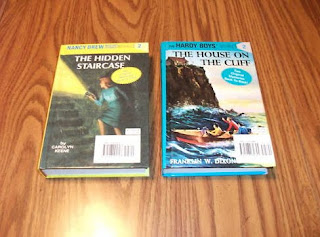
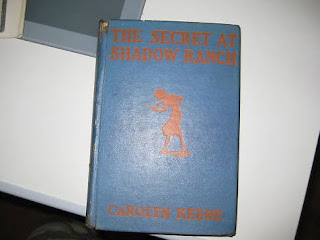
It is quite unlikely that one seller would take such different photos within a short period of time. When I see this type of disparity, I look over the rest of the listings. Let's assume this seller has copied photos. In that case, I will also see photos like these next ones in that seller's listings.
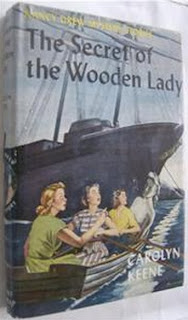
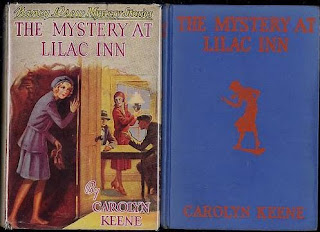
The first photo is from CAL's Book Inn, and the second one is from doc-h. Doc-h almost always uses a scanner for her photos, so they are very consistent and look the same. If I see a jacket and book side-by-side in another seller's listing, I am going to think of doc-h. Now, other sellers do use scanners, so I only conclude that the seller has copied one of doc-h's photos when I see the huge variety of photos in that seller's listings and can find the same photo in either a current or completed listing from doc-h.

I notice that CAL's Book Inn has a different photo style in recent listings. This is not a red flag. As the weeks pass, we shift to different methods. It is when a seller haphazardly shifts between many methods in a short period of time and has photos that are identical to other sellers' photos that I know that the seller is using stock photos. Make note of the word "identical," as that is the key.

I also know that sellers use stock photos when I find images from my website in their listings. Most of my dust jacket images have been edited, and I have intimate knowledge of those scans, since I created them. All that I have to do is look at the seller's image up close and my image up close and can see evidence of my photo editing. Nobody but me can see it, but all of my images have qualities that make them easily recognizable to me. I know what I did to edit the images.

So, if you like to take your photos in 20 different locations around your house, I might investigate your listings, but I will not conclude that you use stock photos unless I find photos that are completely identical to other sellers' photos. Have I made myself clear? I am not jumping to conclusions.

My main problem is that most of the sellers who use stock photos fail to tell their buyers that the photos do not represent the actual books being sold. These sellers should state at the beginning of each listing that the photo is not of the actual book for sale but is provided so that the buyer can see which cover art the book has. As a buyer, I want to know when I am looking at the actual book and when I am not. I need this information for a number of reasons.

Sometimes I need to see the exact condition because most sellers will not answer questions regarding certain concerns correctly. One time, I wanted to upgrade a dust-jacketed book with a faded spine. The seller photographed only the front of the book with the dust jacket in place, so I could not see the spine of the dust jacket.

I contacted the seller, asking whether the spine of the dust jacket was faded, and if so, to what extent. I made clear that I wanted to know about any level of fading. The seller told me that the spine was not faded at all. When I received the book, I was displeased to see that the spine did have fading. I was not happy, but I believe that the seller thought the spine was not faded.

Do you begin to see why we need to see the actual books for sale? As sellers, we may miss something that matters greatly to our buyers. We need to photograph the actual books so that unnoticed important flaws have a chance of getting noticed. I do not think that sellers who use stock photos are bad, but this is a very big deal to me as a buyer.

Sunday, March 14, 2010

What I've Learned in the Last Year

My experiences during the last year while selling on Bonanzle have really opened my eyes as to which books are in the most demand. I have discovered that much of what I once believed is not necessarily true.

This is what I have learned that I did not already know:
  1. Cheap reading copies sell much faster than more expensive collectible books. That is, reading copies are easier to sell, so long as they are priced to sell. Many sellers place high prices on reading copies, so those books never sell.

  2. Volume one in a series is in great demand. I find it very hard to keep the first volume of most series in stock than later volumes. This is even true for the Nancy Drew series, even though the first book has been printed more than any other.

  3. The softcover Trixie Belden books from the 1980s are in much higher demand than the older hardcover editions. I thought the hardcover editions were more desirable, but this is not the trend I have seen in the last year. Buyers are willing to pay higher prices for the low-numbered Trixie Belden softcover books than they are for the older hardcover editions of the same titles.

  4. It is much easier to sell any matte Nancy Drew picture cover edition that is priced for around $5.00 than it is to sell the very desirable printings such as the first picture cover editions that are priced higher.

  5. The Nancy Drew matte picture cover books from the 1970s seem to be in great demand.

  6. The Nancy Drew books in dust jackets have become a bit difficult to sell.

  7. The Donna Parker books are easy to sell.

  8. People will readily buy books that are in poor condition, so long as the books are priced accordingly.